
Your Finance App Doesn't Work for You. You Work for It.
Most 'free' finance apps make money by turning your data into product recommendations. Some don't. Here's how to tell the difference.
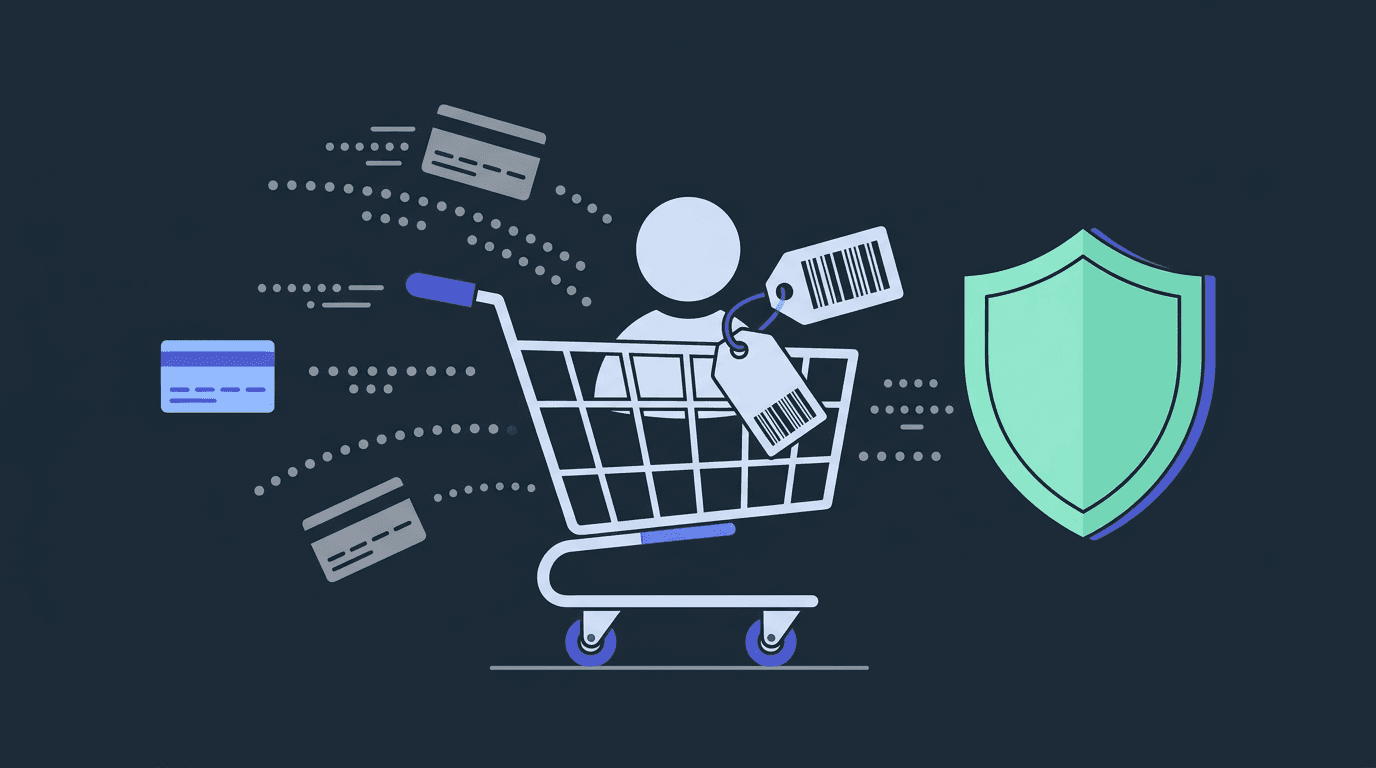
You downloaded the app to manage your money. The app downloaded your data to manage you.
There's a particular kind of betrayal that's unique to personal finance apps. You sign up because you want to get your finances in order. You connect your bank account, your credit cards, maybe your investment accounts too. You trust the app with information you wouldn't share with your best friend: how much you make, how much you owe, what you spend your money on at 2 a.m. when you can't sleep.
And the app takes all of that, builds a profile of your financial behavior, and uses it to sell you products.
Not all apps. But enough of them, including some of the biggest names in consumer finance, that it's worth understanding how the game works. Because the most effective monetization is the kind you don't notice. And these companies have gotten very, very good at making it invisible.
How "free" actually gets paid for
Let's trace the money for the most common free finance app model. You'll recognize the pattern if you've used any of the major ones.
Step one: you connect your accounts. The app gets read access to your transactions, your balances, your recurring charges, your spending patterns. This is positioned as a feature: "we need this to help you budget." And it's partly true. They do need it. They also need it for something else.
Step two: the app categorizes your spending and surfaces "insights." You spent $320 on dining out this month. Your electric bill is higher than average. You're carrying a credit card balance. This feels helpful. It is helpful. It's also the setup for what comes next.
This is where the design becomes subtle. The app has earned your trust by showing you genuinely useful information about your own finances. You've logged in, engaged, seen things that made you feel informed. Psychologically, you're now in a state of reciprocity and trust. The app gave you something of value, and your guard is down. The next screen, the one with the product recommendations, doesn't feel like an ad. It feels like advice. That's not accidental.
Step three: "personalized recommendations." These are the core of the business model. You're carrying a balance? Here's a balance transfer card that'll save you money (and earn the app $50–$200 in commission when you apply). Your savings account earns 0.01%? Here's a high-yield option (affiliate payout). Your credit score went up? You're pre-approved for these three credit cards (ranked by how much the app gets paid, not by how good the card is for you).
The psychology at play here is well-documented. Robert Cialdini's research on reciprocity, one of the foundational principles of persuasion, shows that when someone gives us something for free, we feel an unconscious obligation to give something back. The free credit score creates a sense of indebtedness. The "personalized recommendation" feels like a favor being returned. You're more likely to apply for the credit card because the app already "helped" you. Meanwhile, Tversky and Kahneman's anchoring effect means the first product recommendation you see becomes your reference point, even if it's the one that pays the app the highest commission, not the one that's best for you.
Investopedia's breakdown of Credit Karma makes the model explicit: the company earns a commission every time a user completes the purchase of a recommended product. The recommendations are products. You are the lead. The app is the storefront.
The scale of this thing is staggering
Credit Karma reported $616 million in revenue in Q2 2026 alone, a 23% year-over-year increase. That's $2.4 billion annualized. From a "free" app. The revenue comes from affiliate commissions and interchange fees. Every time you check your "free" credit score, you're entering a funnel designed to convert you into an applicant for a financial product.
The history is instructive. Intuit bought Mint in 2009 for $170 million. In 2020, they bought Credit Karma for $7.1 billion: 42 times more. By 2024, they shut Mint down entirely and migrated its 3.6 million users to Credit Karma's 130 million. The budgeting tool that helped you track spending was abandoned in favor of the sales platform that helped Intuit earn commissions.
A user who went through that migration described the experience on Beancount: "The interface constantly pushes credit products. 'You're pre-approved for…' messages everywhere. The actual budgeting features are buried under credit card offers." They quit after two months.
That's not a bug. That's the product working exactly as designed.
But not every free app works this way
It would be easy, and unfair, to say that every free finance app is exploitative. Some aren't. The difference comes down to one thing: whether the company's revenue depends on your financial success or your financial behavior.
Take Debbie, for example. They partner with credit unions and community banks who fund the platform. Users earn real cash rewards (over $2.3 million collectively as of 2026) for paying off debt, building savings, and hitting financial milestones. The partners get new customers. The users get rewarded for doing things that are genuinely good for them. The incentives point the same direction.
The model is transparent. You can read how it works on their site. You don't have to dig through 30 pages of terms of service to find out who's paying and why. That's the bar.
The question isn't "is it free?" The question is: do I know who's paying, and do their interests align with mine? When a company tells you exactly how they make money, and that revenue depends on your financial improvement rather than your clicks, that's a fundamentally different relationship than an app that buries its affiliate disclosures in legal boilerplate.
This distinction matters more than most people realize. A tool whose revenue depends on you getting better at money will build features that help you get better at money. A tool whose revenue depends on you applying for credit cards will build features that make credit card offers feel helpful and inevitable. The product roadmap follows the revenue model. You can't separate the two.
For couples, the stakes are double
When two people connect their accounts to a finance app, the data haul doubles. Two income streams. Two spending profiles. Two sets of financial vulnerabilities to target. A couple using a "free" finance tool is twice as valuable to advertisers and affiliate networks, and twice as exposed.
And yet, none of the major free platforms have built anything meaningful for couples. The 2026 Bankrate survey shows 62% of couples keep at least some money separate: a massive, underserved market. But building a real couples product means solving hard problems: privacy boundaries between partners, flexible splitting, dual-user dashboards, attribution of shared vs. personal expenses. None of that helps sell credit cards. So nobody builds it.
The industry's incentive structure is pointed at individual users, individual credit profiles, and individual product recommendations. Couples (with their messy shared expenses and their need for tools that aren't secretly sales platforms) simply don't fit the model.
There's an irony here worth sitting with. The people who most need financial tools (couples navigating shared expenses, income disparities, and the daily complexity of two financial lives) are the least well-served by the industry. The reason isn't technical. It's economic. Couples need infrastructure. The industry sells products. Infrastructure doesn't generate affiliate commissions. Products do. So the infrastructure never gets built.
How to tell what's real
Next time you open a finance app, or consider downloading one, run through these questions:
How does this company make money? If the answer is clear and easy to find, good sign. If you have to Google it, bad sign. If the answer is "by recommending financial products when you check your credit score," you're the lead, not the customer.
Does the UX use dark patterns? The FTC defines dark patterns as design choices that trick consumers into decisions they wouldn't otherwise make: hidden fees, false urgency, pre-checked boxes, making it easy to sign up and hard to cancel. If the app makes it harder to skip a credit card offer than to accept one, that's a design choice, not an accident.
Are the recommendations ranked by what's best for me, or by what pays the company the most? Most apps sort by commission payout, not by suitability. Some are honest about this. Most aren't.
What happens to my data? Is it used to power the product (categorization, insights, splitting) and nothing else? Or is it aggregated, analyzed, and shared with advertising partners? The privacy policy will tell you, though it'll take some reading. A good test: can you find the data policy in under two minutes? If not, that's also information.
Would this app make less money if I got my finances in order? This is the question that cuts through everything else. An app that profits from your financial confusion, by recommending products you don't need or exploiting your anxiety about your credit score, has a structural incentive to keep you slightly worried. An app that profits from your financial clarity has the opposite incentive. Follow the alignment.
Does the product solve my actual problem? If you're a couple trying to split expenses fairly, does the app do that? Or does it track your lattes, tell you to cancel Netflix, and then suggest a new credit card?
You're not powerless here
The financial app landscape can feel rigged, but you have more leverage than you think. The industry depends on you not asking questions. The moment you start ("how does this company make money?" / "whose interests does this recommendation serve?" / "would this app benefit from me staying confused?"), the entire dynamic shifts. You stop being a lead and start being a customer who knows what they're paying for.
You deserve a financial tool where the business model is obvious, the incentives are aligned with yours, and your data exists to power the product, not to power someone else's ad revenue.
That bar shouldn't feel aspirational. It should be the minimum. And the good news is: once you can spot the difference between a tool that works for you and a platform that works on you, you'll never unsee it. That clarity is worth more than any "free" credit score.

Related Articles

Budgeting Apps Were Built for Singles. Couples Just Get a Shared Login.
Mint is dead. YNAB costs $99/yr. Every budgeting app tracks your money, not your money together. Here's why the whole category misses the point.

The Money Talk You Keep Avoiding Takes 30 Seconds (With the Right Data)
Money disagreements predict divorce more than almost anything else. But they're not about spending. They're about not knowing.